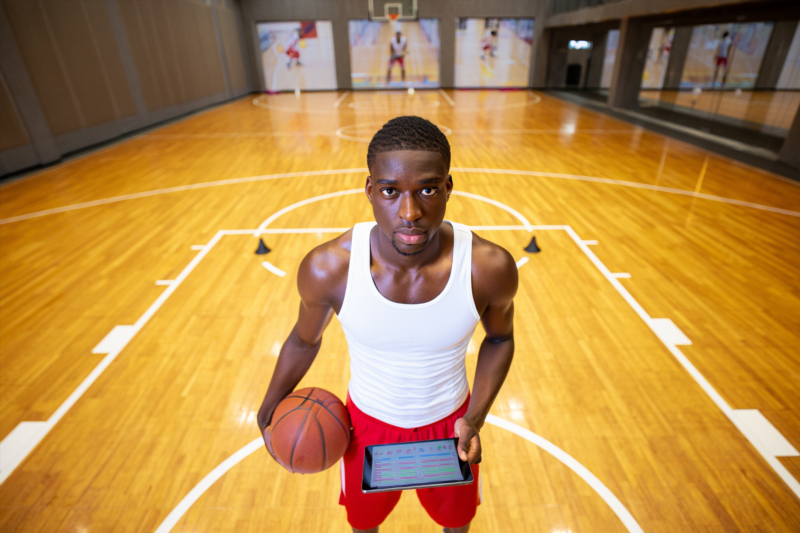
Unlock Your Full Basketball Potential Beyond the Court
In the pursuit of basketball excellence, players and coaches alike recognize that conventional game time isn’t the only route to improvement. At HoopRidge, we emphasize the importance of court awareness training—a strategic approach that sharpens a player’s tactical understanding, observational skills, and decision-making abilities *without the need for live gameplay*. By honing these mental skills, athletes can elevate their performance, develop better spatial recognition, and anticipate plays with precision.
This article explores high-impact court awareness training tips to help basketball players enhance their skills efficiently, supporting the development of game intelligence that translates seamlessly onto the court.
Why Is Court Awareness Critical for Basketball Players?
Court awareness forms the backbone of elite performance. It enables players to:
- Recognize offensive and defensive opportunities
- Anticipate opponents’ actions
- Make quicker and more informed decisions
- Improve positioning and movement efficiency
- Develop a strategic understanding of game flow
By training these skills outside of games, athletes can accelerate their growth and decision-making prowess—especially when combined with biomechanical and shooting science insights from platforms like HoopRidge.
Effective Court Awareness Training Tips
1. Visual Pattern Recognition Drills
Purpose: Enhance the ability to read opponents’ movements and recognize tactical formations.
Method:
- Study video footage of high-level games focusing on offensive sets and defensive alignments.
- Break down plays frame-by-frame to identify patterns.
- Create flashcards with different formations and challenge yourself to recall potential next moves.
Pro Tip: Use virtual or augmented reality tools to simulate game scenarios for more immersive recognition drills.
2. Spatial Awareness Exercises
Purpose: Strengthen understanding of position relative to the ball, teammates, and opponents.
Method:
- Practice solo drills where you visualize the court layout from different angles.
- Set up cones or markers on a court (or in a gym) to simulate players’ positions.
- Use mirror drills to observe your body movements and adjust positioning dynamically.
Tools:
- Basketball court diagrams
- Mobile apps supporting 3D court visualization (e.g., HoopsIQ)
3. Decision-Making Simulations
Purpose: Improve quick thinking and strategic choices.
Method:
- Use coaching videos to analyze decision points.
- Play chess or strategy games that promote tactical thinking.
- Engage in mental rehearsal—visualize various game situations and the best responses.
Tip: Incorporate scenario-based drills where you choose actions based on given court situations, reinforcing decision pathways.
4. Observation and Film Study
Purpose: Develop keen observational skills and game IQ.
Method:
- Regularly watch professional games, focusing on players renowned for court awareness.
- Pause and analyze players’ spacing, timing, and decision-making.
- Take notes on positioning, passing routes, and defensive adjustments.
Advanced Insight: Use databacked game intelligence from HoopRidge to understand underlying offensive structures and biomechanics influencing player movements.
5. Tactics and Playbook Review
Purpose: Internalize offensive and defensive schemes.
Method:
- Study your team’s playbook thoroughly.
- Visualize executing plays from different court positions.
- Diagram plays and memorize key decision points.
Benefit: Reinforces understanding of offensive structures and tactical innovation, necessary for becoming more unpredictable.
Supplement Your Skills with Scientific Insights
Modern basketball is increasingly driven by biomechanics, shooting science, and psychological conditioning. Incorporate these elements into your training:
| Area | Focus | How to Apply |
| Biomechanics | Shooting science | Analyze your shooting form—improve mechanics for better spatial awareness of shot release points. |
| Tactical Innovation | Offensive structures | Understand the modern offensive playbook to anticipate and decode opponents’ strategies. |
| Competitive Psychology | Decisionmaking | Practice mental resilience and focus during drills to enhance game-time decision accuracy. |
At HoopRidge, we turn court systems into well-oiled processes, revealing how skill preparation and decision-making shape future champions.
Final Thoughts: Make Every Practice Count
Developing court awareness without playing actual games is not only possible but essential for holistic player growth. By combining visual pattern recognition, spatial exercises, simulation drills, and film analysis, athletes build a robust mental framework to complement their physical skills.
Remember: Consistency is key. Integrate these training tips into your routine regularly, and watch your court awareness—and overall performance—reach new heights.
Ready to Take Your Game to the Next Level?
Start implementing these court awareness training tips today to see measurable improvements. Embrace a performance-driven mindset, leverage databacked game intelligence, and turn your knowledge into on-court excellence.
Contact HoopRidge now to discover tailored training programs, tactical innovation resources, and cutting-edge insights that will make you a smarter, faster, and more unpredictable player.
Frequently Asked Questions (FAQs)
Q: Can I improve court awareness without playing full games? Absolutely. Focused mental and situational drills are proven to enhance your tactical understanding and decision-making skills—key components of court awareness.
Q: How long should I practice these drills to see results? Consistency matters. Practice a mix of visual recognition, spatial exercises, and film analysis for at least 15-20 minutes daily. Results may vary but often appear within a few weeks of dedicated effort.
Q: How does court awareness relate to biomechanics and shooting science? Understanding biomechanics optimizes your shooting form, while awareness of offensive structures aligns your physical actions with strategic goals—both critical for modern basketball mastery.
Q: Is it effective to combine these mental drills with physical practice? Yes. Integrating mental awareness training with physical drills creates a comprehensive approach that accelerates skill acquisition and performance adaptability.
Turn your knowledge into on-court excellence—start your court awareness training today.